If you are struggling with persistent hair thinning, split ends that keep creeping upward, or frizz that refuses to tame regardless of how many styling creams you apply, you are not alone. Most of us treat our hair based purely on how it looks on the surface. However, just like your skin, your hair is governed by a highly specific, multi-layered biological system.
In a climate like Egypt’s, where your strands constantly battle hard tap water minerals, high summer humidity, urban pollution, and the localized friction of daily hijab wear, relying on guesswork simply won’t cut it. To truly reverse damage and accelerate thickness, you must understand your hair structure and anatomy. When you understand the science of your strands, you can choose targeted cosmeceutical formulas that fix structural weaknesses at the root and shaft.
Part 1: The Anatomy of a Hair Strand
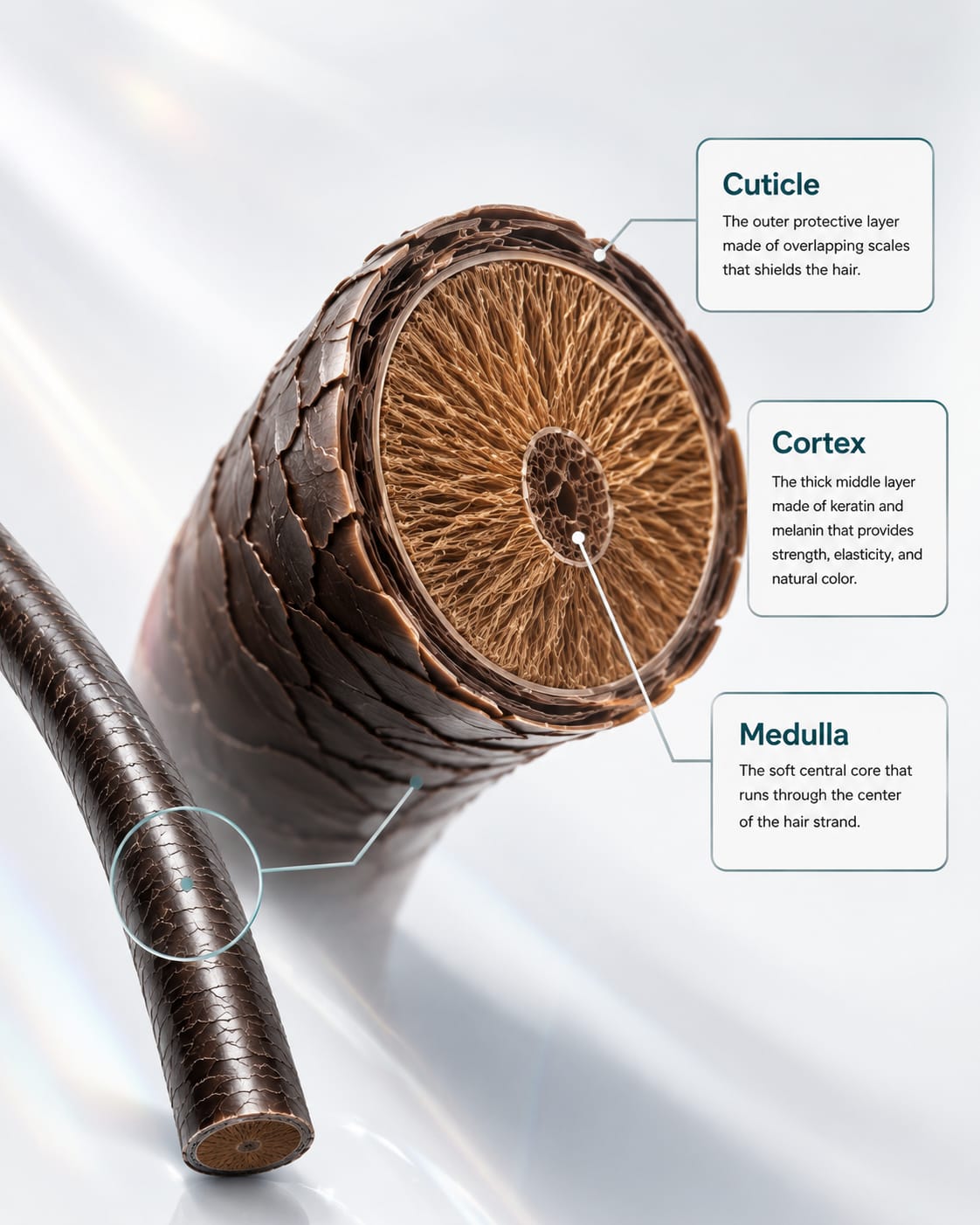
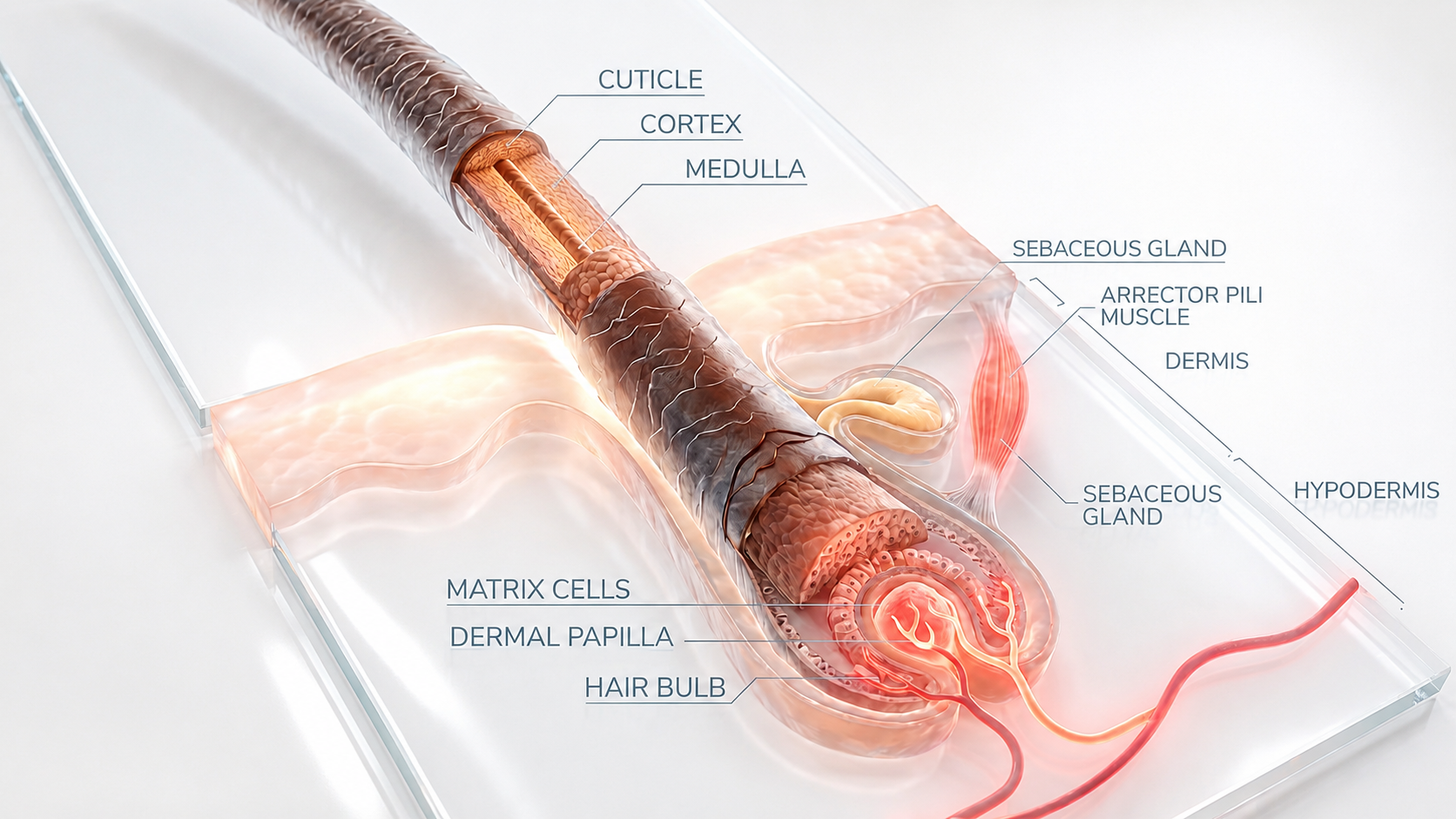
The part of your hair that you wash, style, and cut is called the hair shaft. The shaft is composed of non-living tissue made up of a tough, fibrous protein called keratin. If you look at a single strand under a microscope, you will see it is divided into three concentric layers:
The Cuticle: Your Shield Against the Elements
The cuticle is the outermost layer of the hair shaft. It consists of clear, overlapping cells that resemble shingles on a roof or a pinecone.
- Its Role: A healthy cuticle lies completely flat, sealing in internal moisture, reflecting light to create natural shine, and protecting the inner core from chemical and environmental damage.
- The Egyptian Stressor: When you expose your hair to hard water minerals (like calcium and magnesium buildup), high-heat styling tools, or alkaline shampoos, these shingle-like cells lift and crack. This creates high-porosity hair, allowing internal moisture to escape easily and making your strands highly vulnerable to humidity, snapping, and severe frizz.
The Cortex: The Structural Powerhouse
Located directly beneath the cuticle, the cortex forms the bulk of your hair strand’s mass.
- Its Role: The cortex contains tightly packed, long chains of keratin proteins bound together by chemical bonds. This layer dictates your hair’s natural strength, elasticity, and texture. It also houses the melanin pigments that give your hair its natural color.
- The Damage Shift: When chemical treatments or extreme heat penetrate past the cuticle and break down the internal protein bonds inside the cortex, the hair loses its elasticity. This structural collapse is what causes your hair to stretch out like an over-worn elastic band and break off mid-shaft.
The Medulla: The Core
The medulla is the innermost, soft central core of the hair strand. It is primarily found in thick, coarse, or dark hair textures and is often completely absent in fine, blonde, or thin hair. Scientists still view the medulla as an evolutionary remnant with no major function in daily hair care management.
Part 2: The Hair Follicle
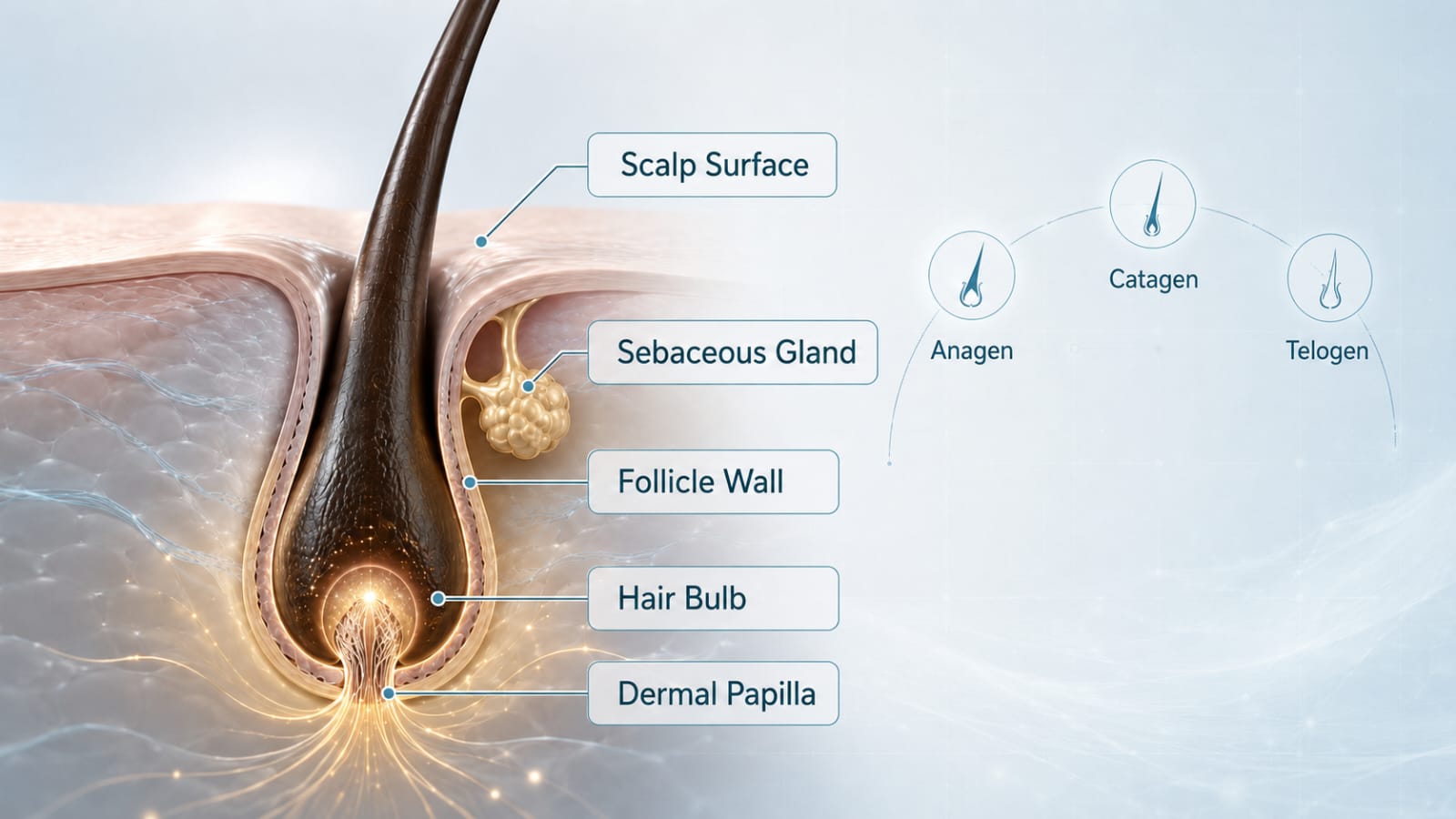
While the hair shaft determines how your hair looks, the hair follicle anatomy determines how your hair grows. The follicle is a tiny, tunnel-like segment embedded within the dermal layer of your scalp. This is where your hair is actively alive and connected to your body’s vascular network.
At the base of each follicle sits the hair bulb, which surrounds the dermal papilla. Blood vessels feed the dermal papilla, delivering the essential amino acids, vitamins, and hormones needed to divide cells and push out new hair. Your follicles operate in a continuous, multi-phase cycle:
When your scalp undergoes stress, whether from chronic hard water mineral calcification, poor local blood circulation, or hormonal changes, your follicles drop prematurely into the shedding phase, resulting in visible hair thinning and diffuse hair loss.
Advanced Target Map: Matching Actives to Hair Anatomy
Because different hair problems occur in completely different parts of your hair anatomy, a single generic formula cannot solve everything. To achieve real structural transformation, you must align high-density active ingredients with the exact layers they are biophysically engineered to target:
| Anatomical Target | Physiological Goal | Hero Actives | Supremo Solution |
|---|---|---|---|
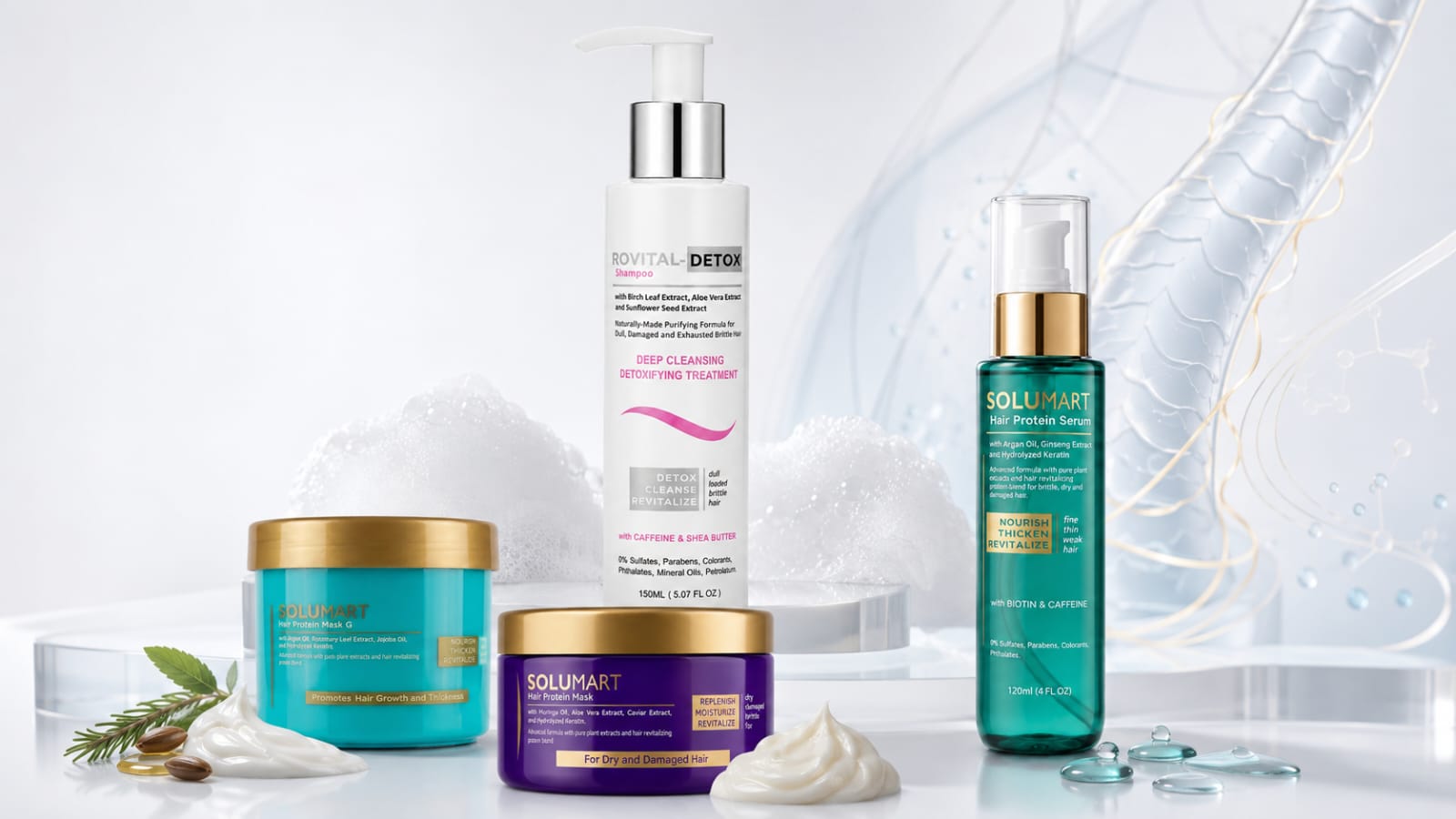
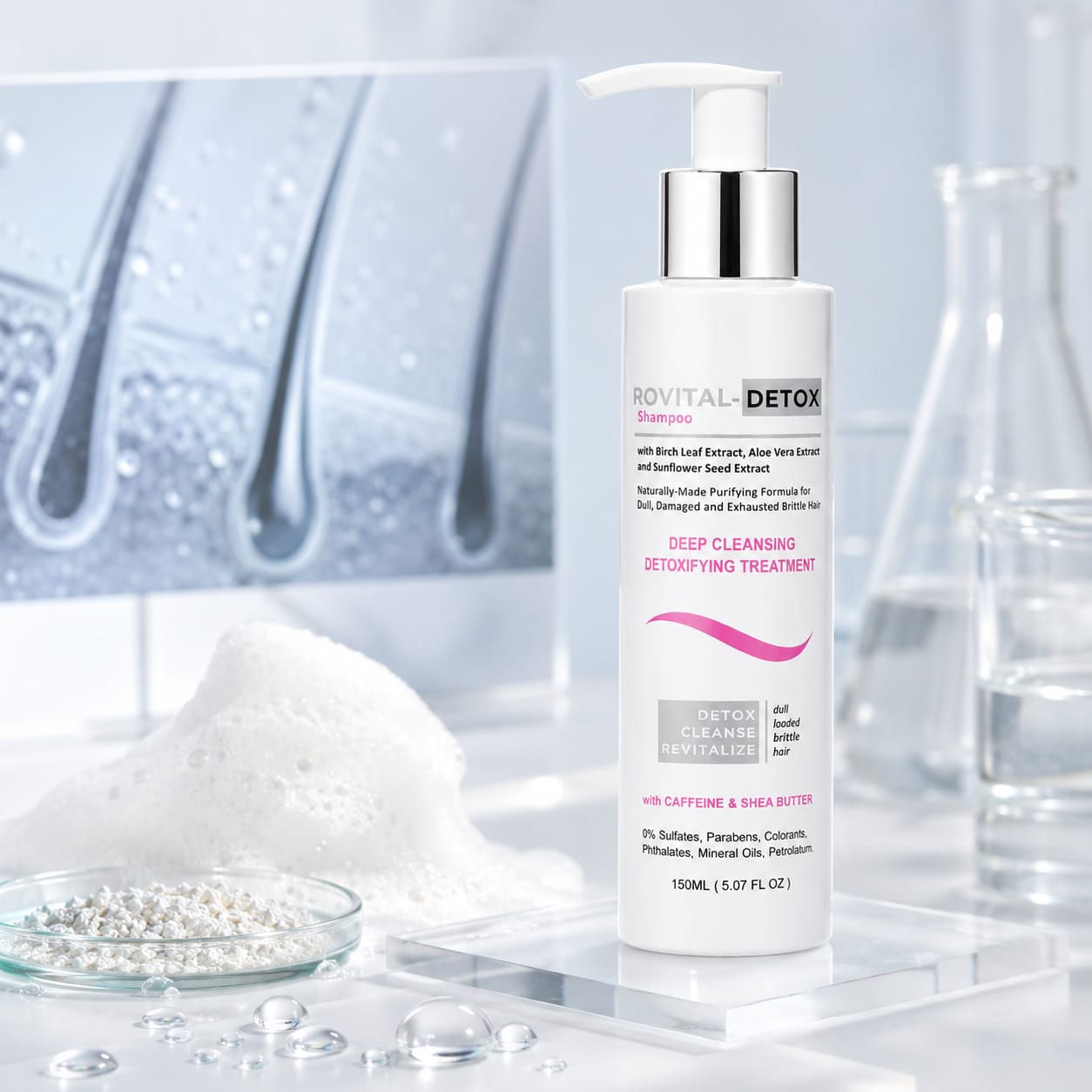
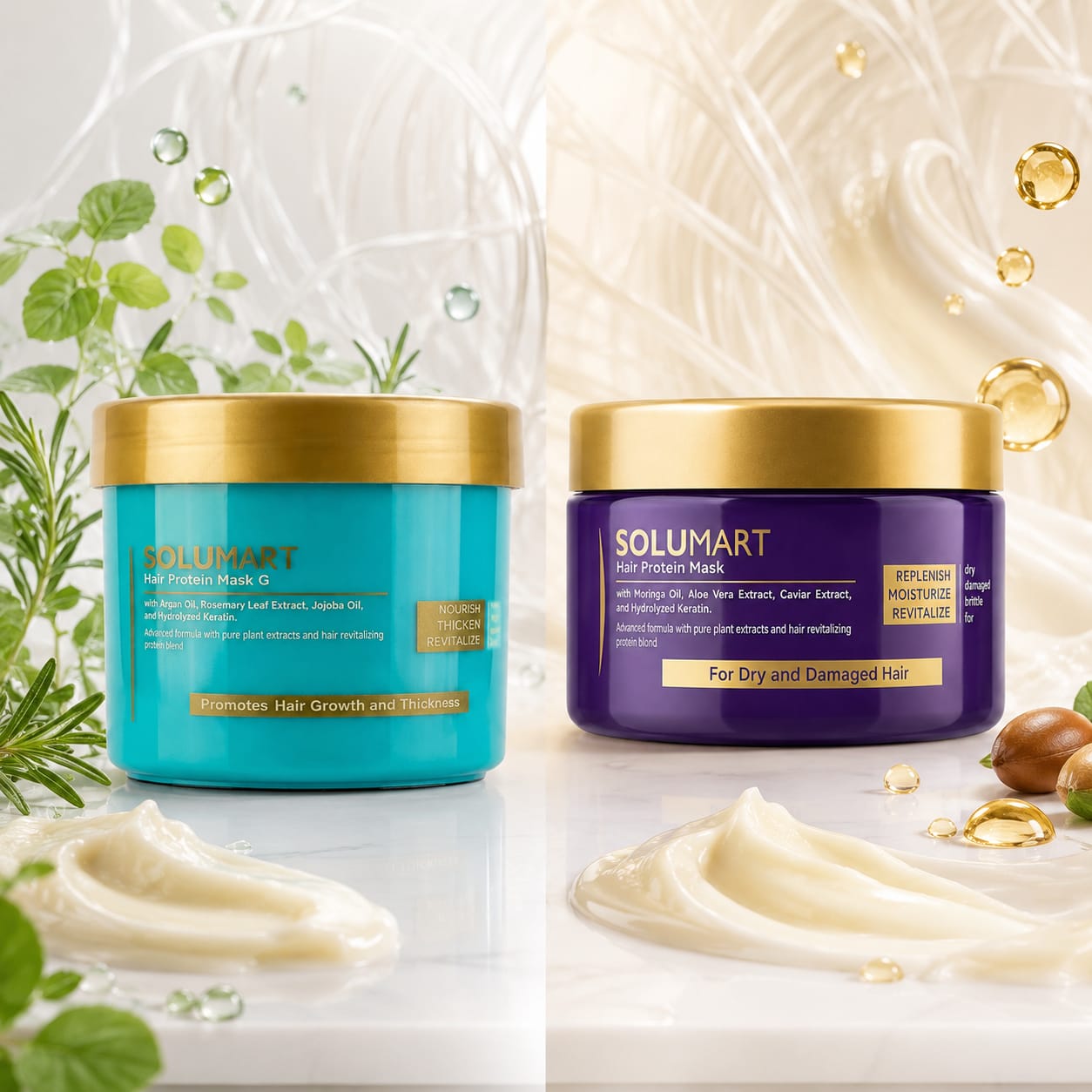
| The Follicle Matrix and Bulb | Prolong the growth phase, stimulate blood flow, and block shedding. | Procapil, Capixyl, Caffeine, Rosemary Leaf Extract, Saw Palmetto. | Solumart Hair Protein Mask G (Green) and Rovital-Detox Shampoo. |
| The Internal Cortex | Patch internal protein gaps, rebuild broken bonds, and restore elasticity. | Hydrolyzed Keratin, Marine Collagen, Hydrolyzed Elastin, Wheat Protein. | Solumart Hair Protein Mask (Purple). |
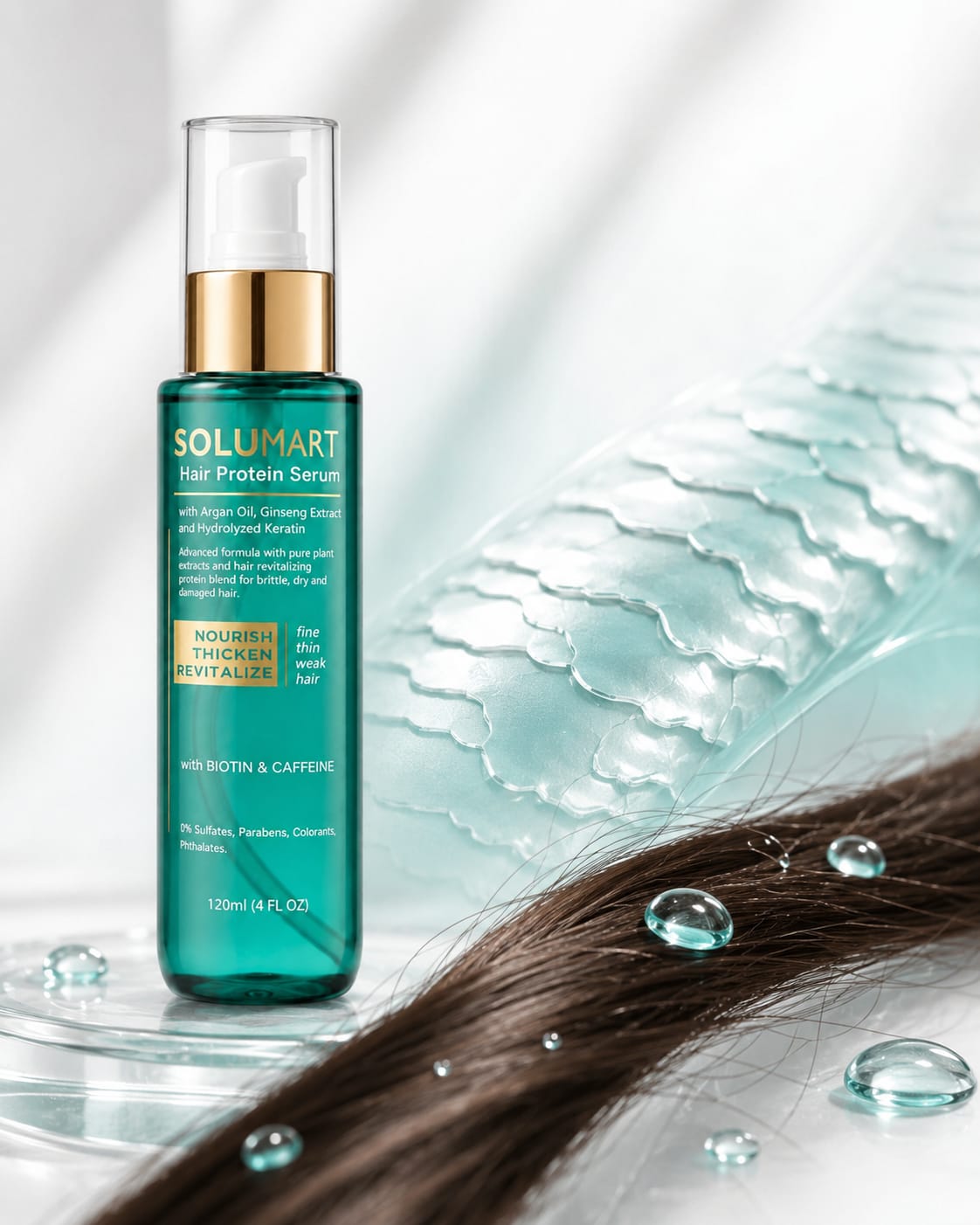
| The Outer Cuticle Layer | Seal open scales, protect against thermal styling, and shield from humidity frizz. | Argan Oil, Moringa Oil, Jojoba Oil, Avocado Oil, Vitamin E. | Solumart Hair Protein Serum. |
Protecting Your Hair Anatomy from Local Realities
Now that you know the biological structures, here is how to protect them from distinct local environmental stressors:
De-calcify the Scalp and Follicles
Hard water minerals form an invisible, alkaline crust over your scalp, choking your hair follicles and causing hair follicle calcification.
Reinforce the Cortex Structure
If your hair feels limp, thin, or easily snaps when pulled, the keratin structure within your cortex is compromised. You need to feed your hair structure deep protein nutrition.
- For fine, thinning hair seeking structural mass and follicle activation, apply Solumart Hair Protein Mask G (Green), which combines Hydrolyzed Keratin with follicle-stimulating Saw Palmetto and Rosemary Extract.
- For thick, coarse, or dry high-porosity hair suffering from structural styling damage, use Solumart Hair Protein Mask (Purple) to replenish the lipid-protein matrix using Moringa Oil, Caviar Extract, and Hydrolyzed Elastin.
Laminate the Cuticle Scales
Never let your hair dry without applying an anatomical seal to the cuticle.
Stop Speculating. Start Formulating.
Your hair structure is an exact science. The next time you evaluate a product or deal with hair fallout, look beyond the marketing promises and read the formulation list. By nourishing your living root system and physically patching your structural keratin shaft, you give your hair anatomy the exact biological tools it needs to grow thick, resilient, and radiantly healthy.
Frequently Asked Questions
Is hair actually “dead” tissue?
The hair strand above your scalp is structurally dead, consisting entirely of keratinized proteins. This means it cannot heal itself biologically when sliced open or burnt. However, the root system inside the hair follicle is completely alive, dividing cells rapidly and relying on consistent cellular nutrition to sustain healthy growth cycles.
How does hard tap water cause hair fall at the anatomical level?
Hard water minerals leave a heavy, calcified deposit at the base of the hair shaft and directly inside the follicle opening. This mineral crust triggers localized scalp inflammation, disrupts the healthy scalp microbiome ecosystem, and weakens the hair bulb attachment, causing the strand to drop prematurely into the shedding phase.
Can a split end be naturally fused back together?
Topical proteins and premium plant oils can temporarily laminate and seal a frayed cuticle layer together, masking the appearance of split ends and preventing the tear from ripping further up the cortex shaft. However, once the inner cortex structure is completely split open, the only definitive physical correction is a micro-trim to safeguard the remaining healthy portion of the strand anatomy.