Have you ever wondered why your skin behaves the way it does during a dusty Cairo micro-storm, or why coastal humidity completely changes your skin texture? We often treat our skin as a single flat surface where we apply creams, serums, and cleansers. In reality, your skin is a highly complex, dynamic, multi-layered living organ. It is your body’s largest organ and its first line of defense against the outside world.
To build a skincare routine that actually works, you don’t need a shelf full of trendy products. You need to understand your skin structure and anatomy. When you know how the different skin layers function, you can give your skin exactly what it needs to remain resilient, healthy, and radiant.
The Three Core Layers of Skin Anatomy
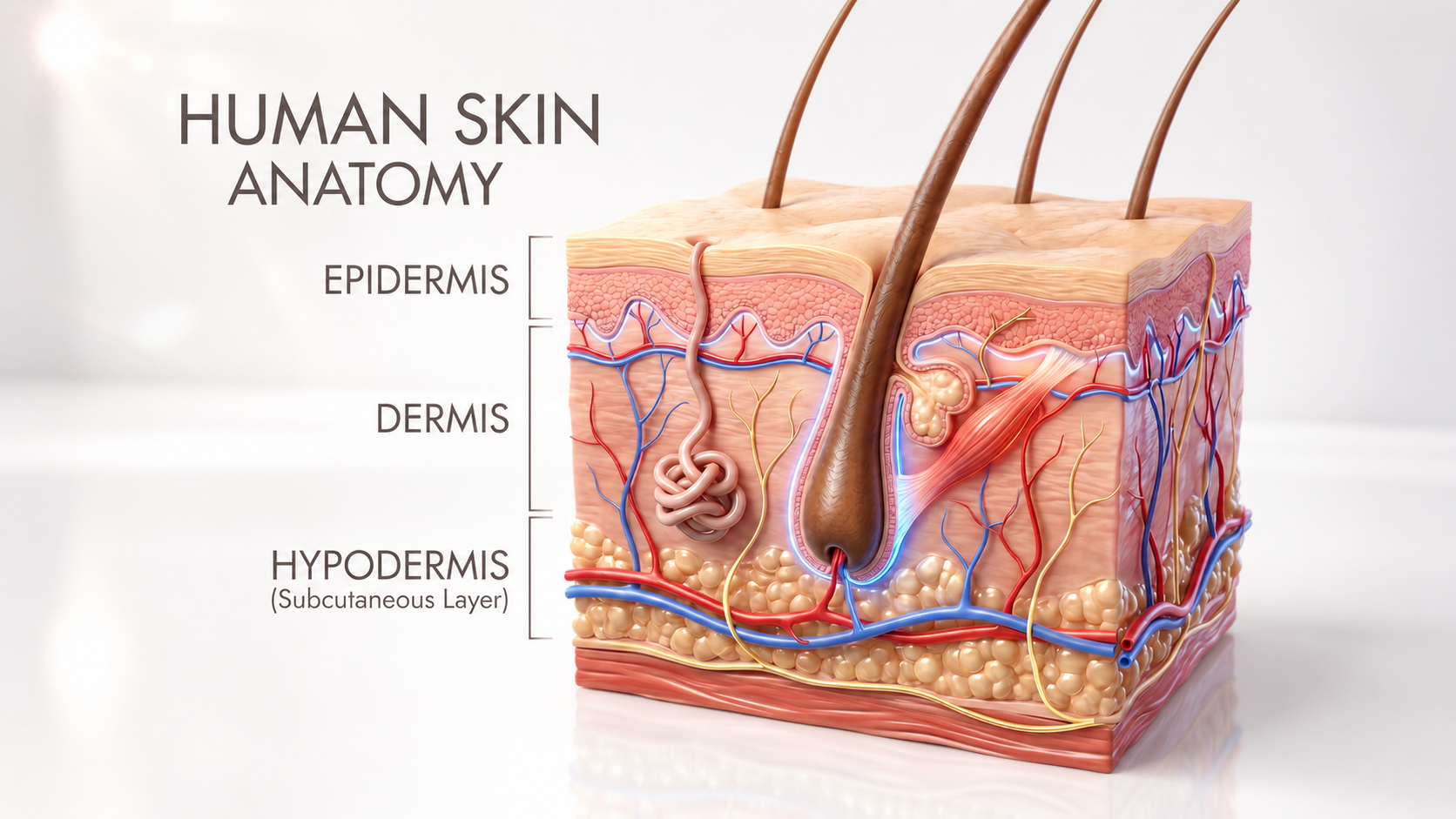
Your skin is divided into three distinct biological layers, each with its own specialized architecture and responsibilities.
The Epidermis: Your Protective Shield
The epidermis is the outermost layer of your skin — the part you can see, touch, and treat with your daily products. It contains no blood vessels and relies entirely on the deeper layers for its nutrient supply.
The primary job of the epidermis is protection. It prevents water from evaporating out of your body and blocks environmental impurities, bacteria, and dust from getting in. Within the epidermis, specialized cells called melanocytes produce melanin, the pigment that gives your skin its color and provides natural (though limited) defense against UV radiation.
The Dermis: The Support Engine
Located directly beneath the epidermis, the dermis is the thick, structural powerhouse of your skin anatomy. It is packed with blood vessels, nerve endings, sweat glands, and sebaceous (oil) glands.
The dermis is entirely responsible for your skin’s elasticity and strength because it houses two vital structural proteins:
- Collagen: The protein that gives your skin its firmness and structural support.
- Elastin: The protein that allows your skin to stretch and snap back into place.
When environmental factors like chronic UV exposure degrade these proteins, the skin structural matrix weakens, leading to premature fine lines and loss of firmness.
The Hypodermis: The Cushioning Layer
Also known as the subcutaneous layer, this is the deepest part of your skin structure. Composed mostly of fat and connective tissue, the hypodermis acts as an internal shock absorber, insulates your body to regulate temperature, and attaches your skin to the underlying muscles and bones.
The Stratum Corneum: The “Brick and Mortar” of Skin Health
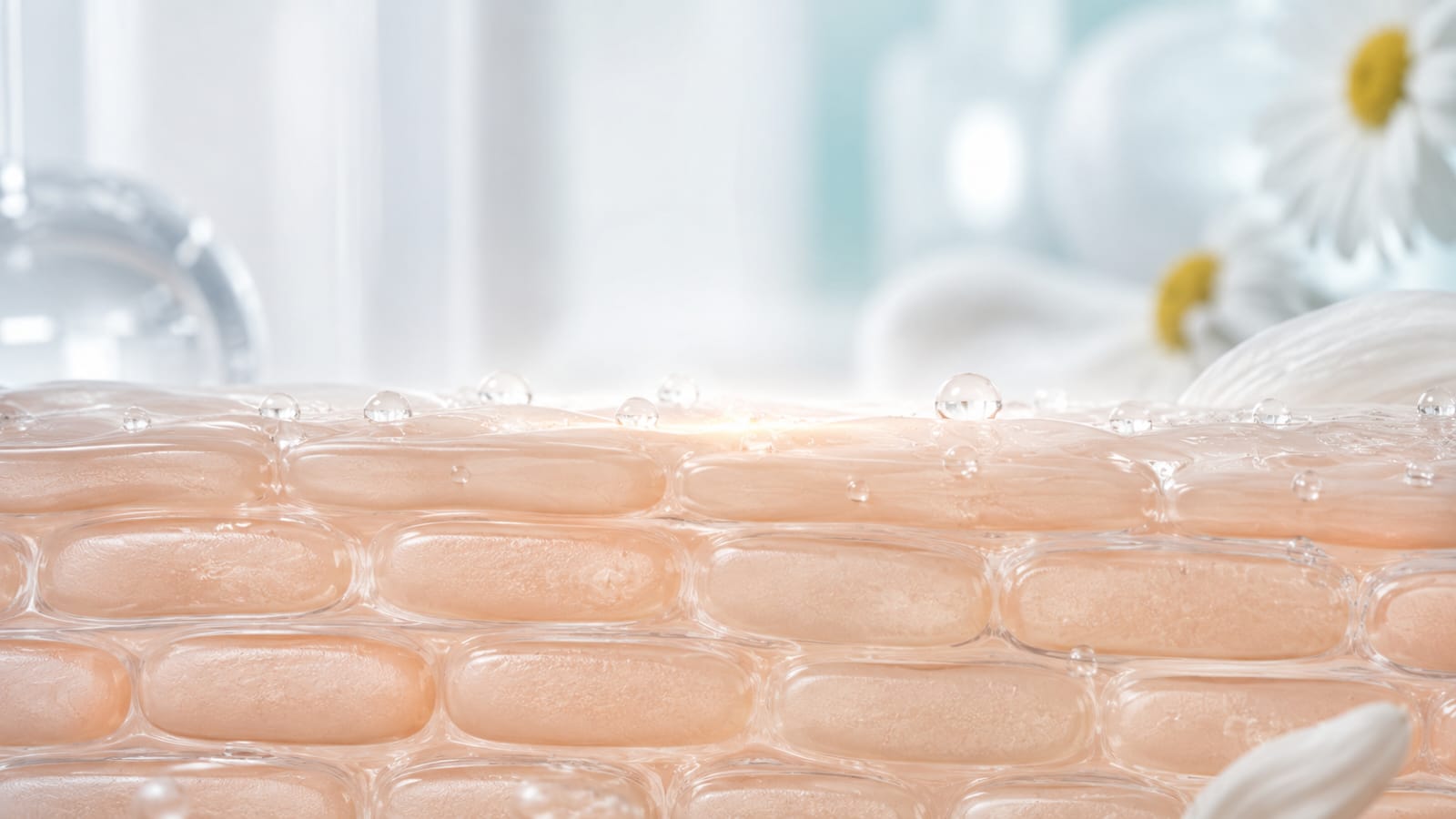
If we zoom in on the very top sub-layer of the epidermis, we find the absolute crown jewel of skincare science: the stratum corneum, widely known as your skin barrier.
Biochemists frequently use the “Brick and Mortar” model to describe how this delicate barrier protects your health:
| Skin Structure Element | Biological Counterpart | Functional Role |
|---|---|---|
| The Bricks | Corneocytes (dead, hardened skin cells) | Provide physical structure and block external irritants. |
| The Mortar | Lipid Matrix (ceramides, cholesterol, fatty acids) | Holds cells together, seals in structural moisture, and maintains barrier integrity. |
When your skin barrier is healthy, the lipid mortar is intact. Your skin feels soft, retains moisture efficiently, and easily resists environmental stressors. However, if you strip away this lipid matrix with harsh chemicals or aggressive scrubbing, the “bricks” loosen. This leads to Transepidermal Water Loss (TEWL), leaving your skin vulnerable to irritation, redness, and flaking.
How Egypt’s Climate Impacts Your Skin Structure
Your skin anatomy doesn’t exist in a vacuum; it constantly adapts to your surroundings. In Egypt, our skin structure battles specific environmental stressors daily:
- Intense UV Radiation With over 300 sunny days a year, constant UV exposure penetrates deep into the dermis, breaking down collagen and triggering post-inflammatory hyperpigmentation in the epidermis.
- Urban Pollution and Fine Dust Micro-particles from city air settle on the epidermis, mixing with sebum to clog pores, trigger oxidative stress, and irritate the skin barrier.
- Overactive Sebaceous Glands High summer temperatures signal the oil glands in your dermis to produce excess sebum, leading to oily skin surface textures and acne breakouts.
- Hard Water Mineral Buildup Washing your face with hard tap water can leave mineral deposits on the skin surface, disrupting the natural pH balance of the stratum corneum and stripping away essential lipids.
Translating Skin Anatomy into Your Daily Cleansing Routine
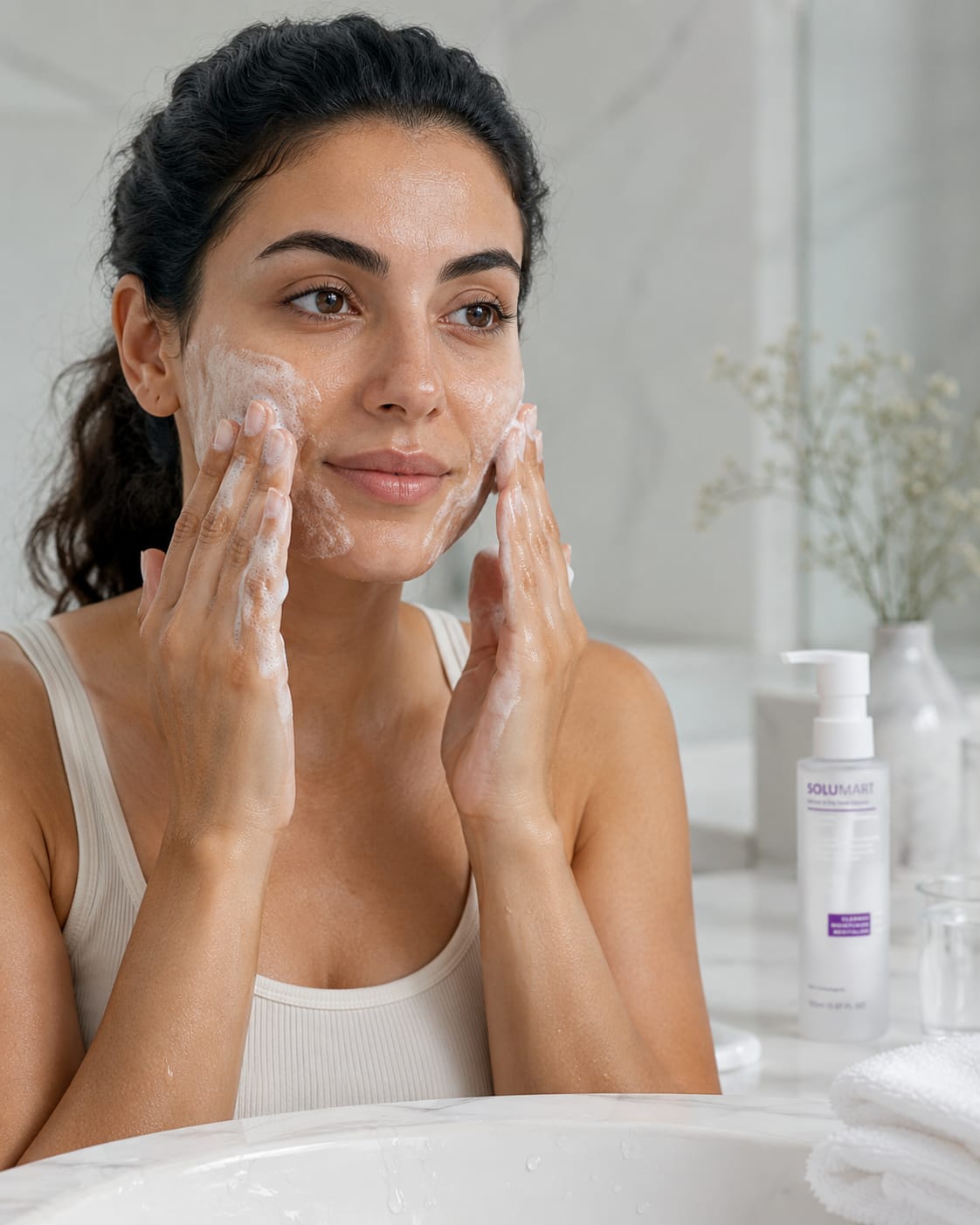
Because every product you use interacts directly with your skin anatomy, your daily routine should support your skin’s natural biology, never fight against it. This is particularly true when it comes to cleansing, which is the most critical step for maintaining anatomical balance.
Supporting a Dry or Compromised Skin Barrier
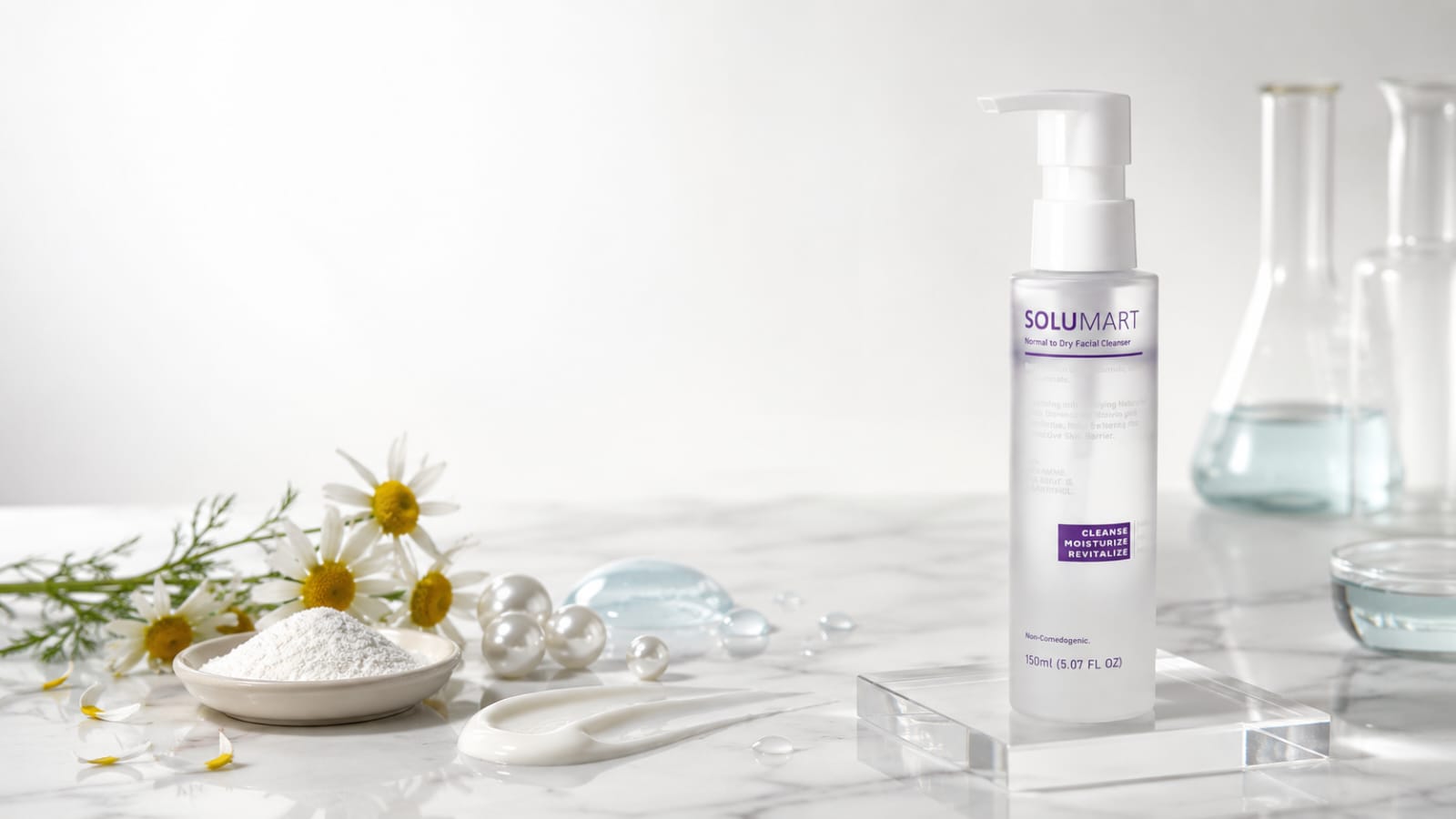
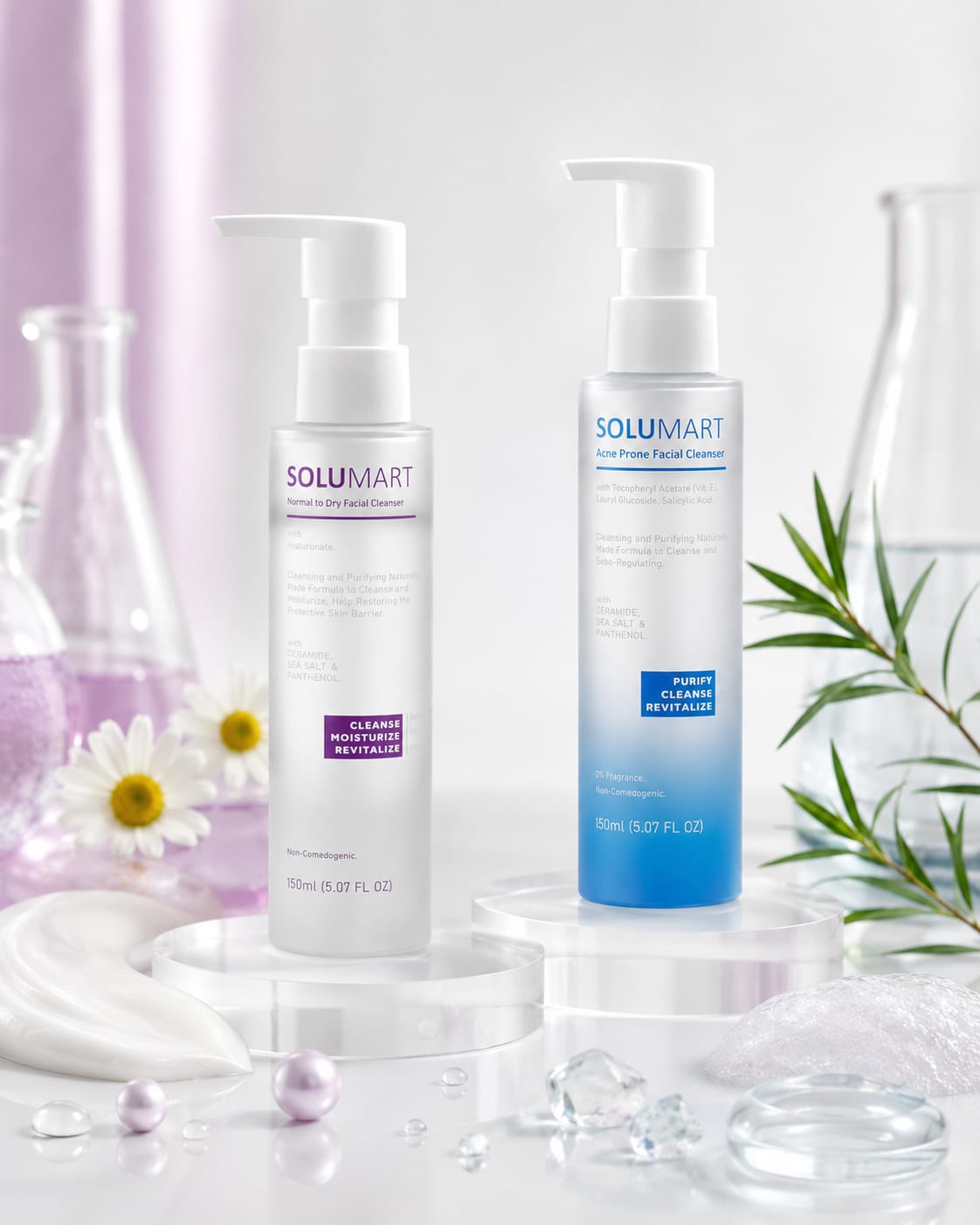
If your skin structure is naturally dry or your stratum corneum has been stripped by harsh weather, your main goal is lipid preservation. You need a cleanser that gently removes surface impurities without dissolving the essential “mortar” of your barrier.
Regulating an Oily, Acne-Prone Skin Layer
If your dermis is pumping out excess sebum, that oil travels up through the pore lining to the surface of the epidermis, trapping dead skin cells and creating plug-like blockages. To treat this structurally, basic soap won’t suffice. You need targeted chemical exfoliation that can safely penetrate the pore.
Respect Your Anatomy for Lasting Radiance.
Great skin isn’t about altering your biology; it’s about respecting your natural skin architecture. By shifting your perspective from superficial cosmetic fixes to deep dermal and barrier care, you can build a stable, lifelong relationship with your skin. Take a look at your current routine: is it protecting your lipid mortar, or is it stripping your shield away?
Frequently Asked Questions
How can I tell if my skin barrier is damaged?
When the lipid matrix of your stratum corneum is compromised, you will experience symptoms like a persistent burning or stinging sensation when applying standard products, dry flaking patches, sudden redness, or unexpected breakouts due to bacteria penetrating the weakened shield.
Can skincare products penetrate into the deepest layer (hypodermis)?
No. Standard over-the-counter skincare products are formulated to work primarily within the epidermis (specifically the stratum corneum) and the upper portions of the dermis. The hypodermis is too deep to be reached by topical cosmetics.
Why is Niacinamide recommended for both dry and oily skin structures?
Niacinamide (Vitamin B3) is a highly versatile, bio-compatible ingredient. For dry skin, it stimulates the natural production of ceramides to repair the skin barrier. For oily and acne-prone skin, it helps regulate sebum production and calms visible surface redness and inflammation.