Walk into almost any local pharmacy in Egypt, and you will find shelves crowded with generic hair products promising a miracle cure for frizz, dryness, or shedding. Yet so many of us buy these products only to end up with hair that feels either completely weighed down and greasy, or stripped, brittle, and dry.
The problem is rarely the product itself. It is a mismatch in biology. Your hair profile is completely unique. To build a routine that keeps your strands resilient through Cairo’s dry summer heat, coastal humidity, and hard tap water, you have to look deeper than the surface. You need to ask one foundational question: what is your hair type?
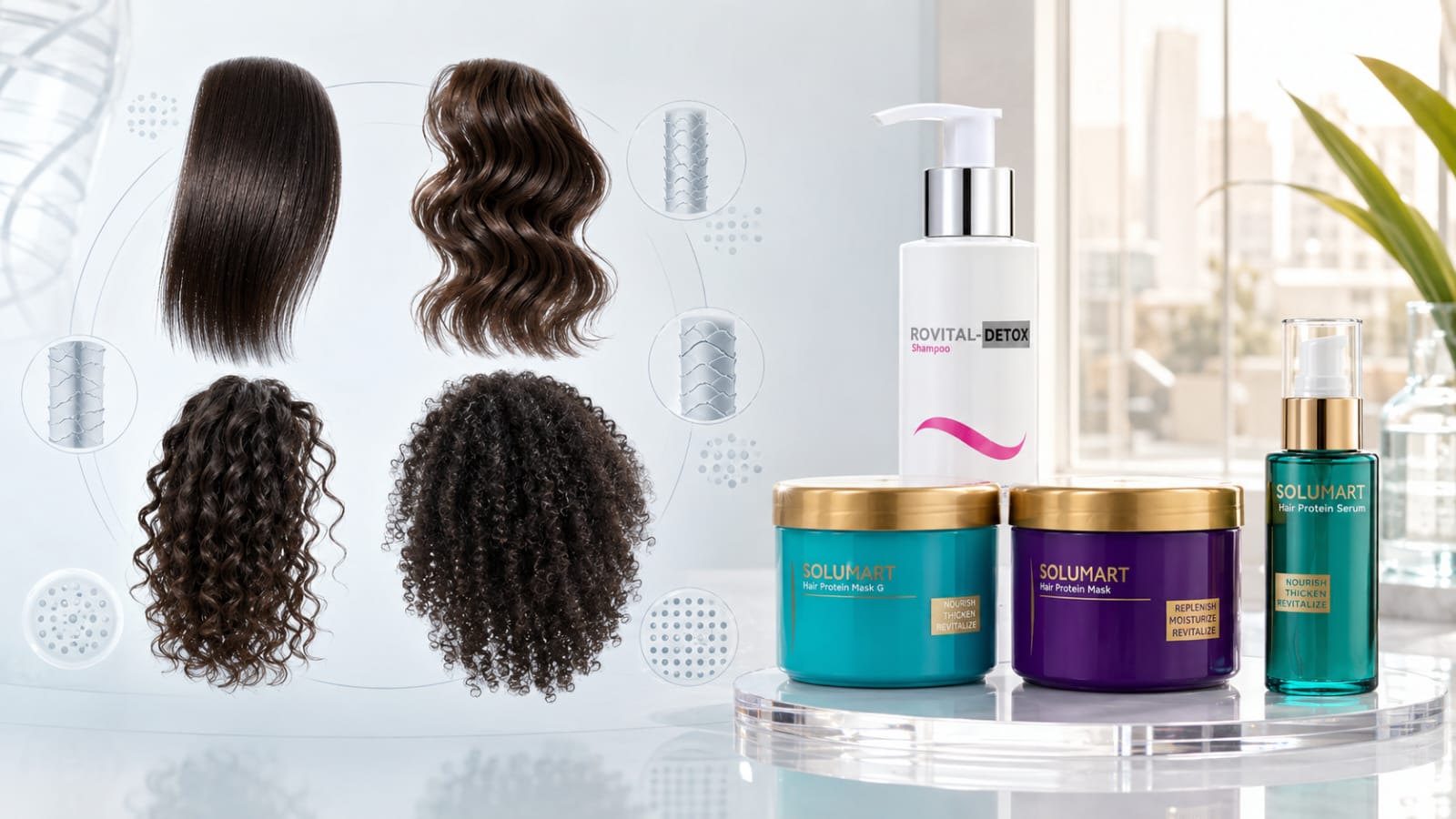
True hair typing is a three-dimensional matrix, determined by three essential elements: your curl pattern, your porosity, and your strand density. Here is the science of your strands so you can stop guessing and start treating.
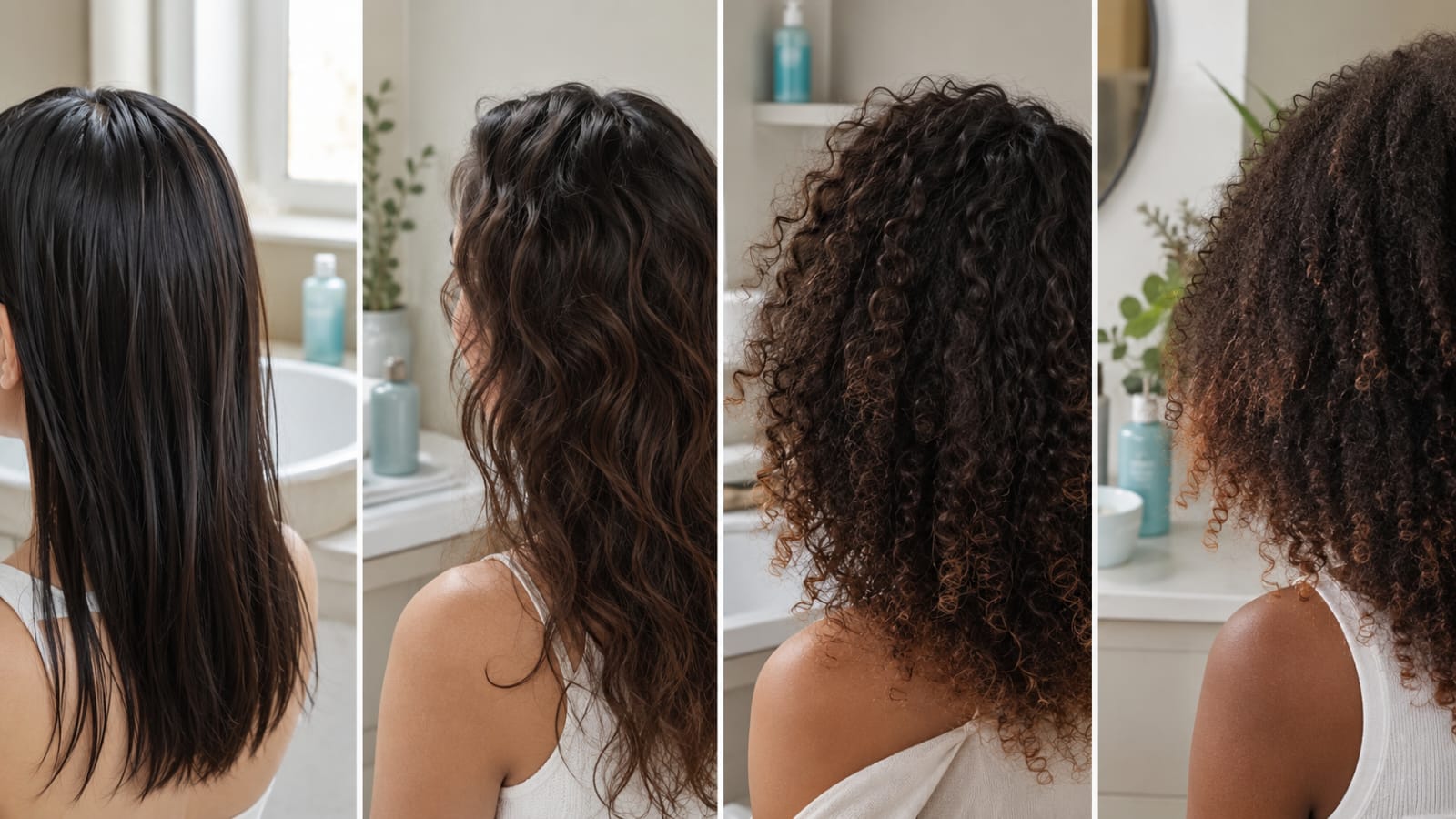
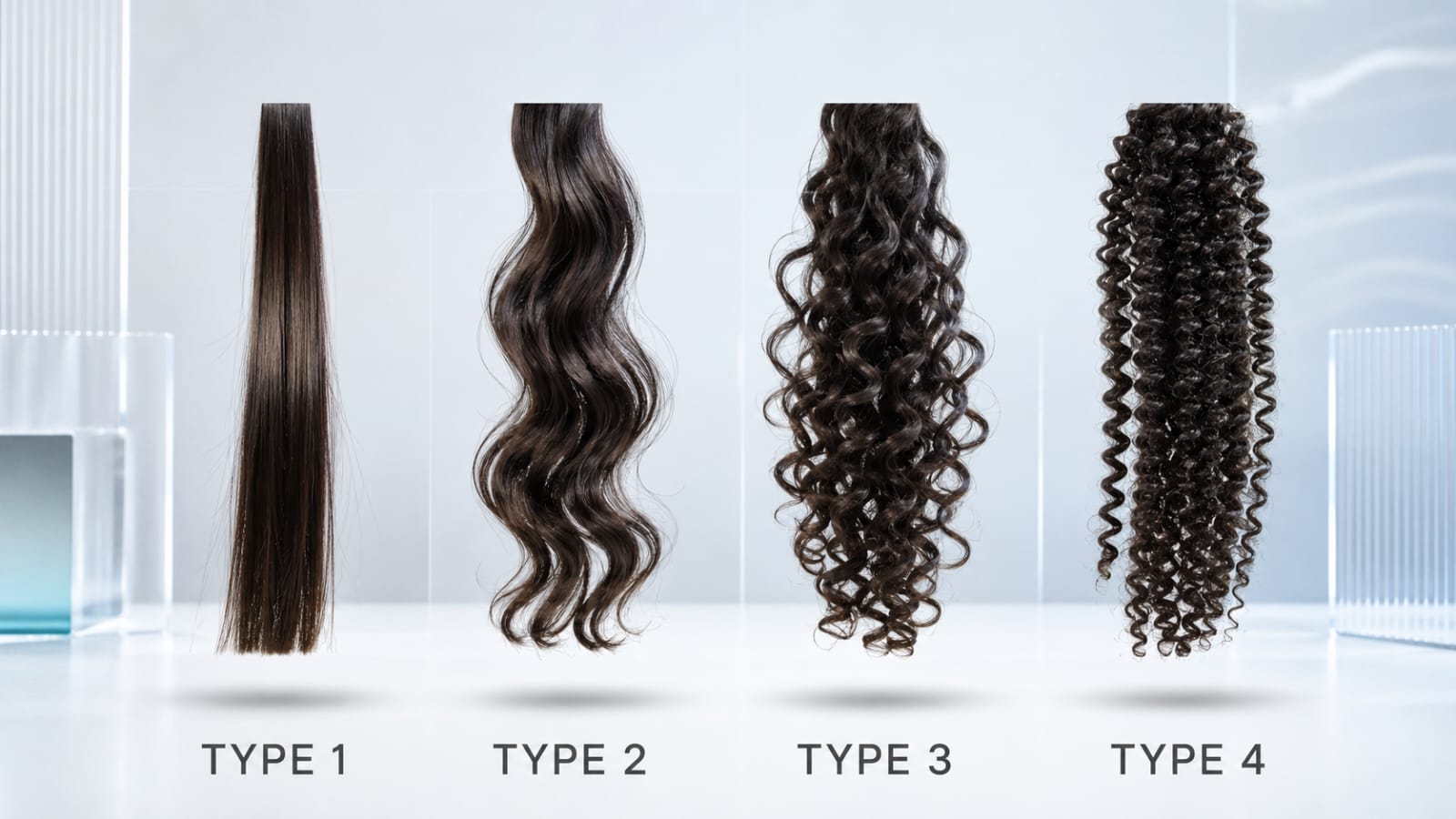
Dimension 1: The Visual Curl Pattern (Type 1 to Type 4)
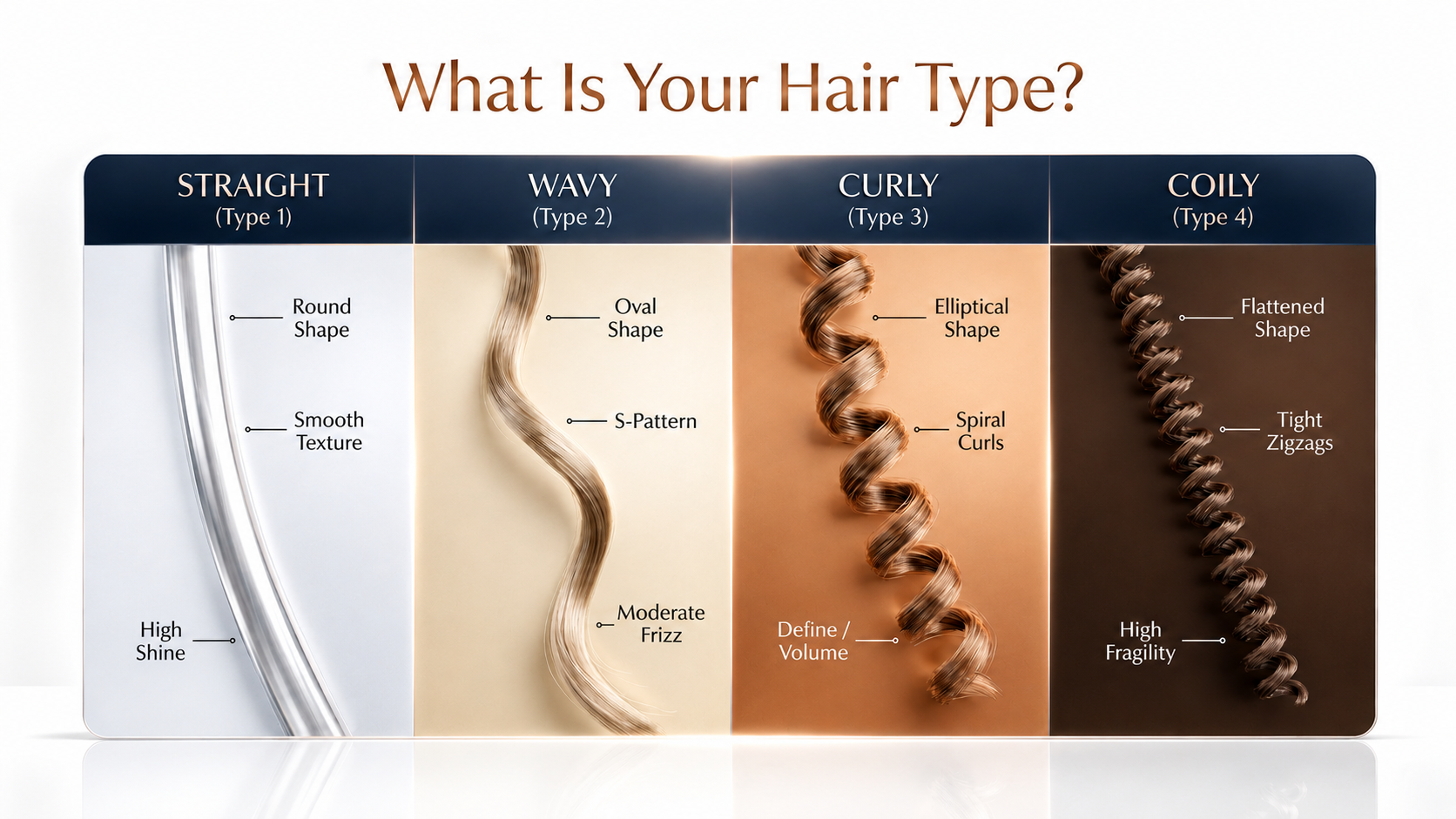
The most widely used classification tool is the standard hair typing system, which categorizes hair based on the physical shape of its curl pattern. This pattern is set by the shape of the hair follicle in your scalp. Round follicles create straight hair; elliptical follicles create waves, curls, and coils.
Type 1 — Straight Hair
No natural curl or wave. The hair shaft is perfectly straight, so sebum travels down the strand effortlessly. Type 1 hair tends to be naturally shiny but is highly prone to looking limp and greasy when weighed down by heavy oils.
Type 2 — Wavy Hair
Forms an “S” shape and sits between straight and curly.
- 2A: Fine, thin waves that straighten easily.
- 2B: Shorter, more defined waves, highly prone to frizz in humidity.
- 2C: Thick, coarse waves that verge on loose curls.
Type 3 — Curly Hair
Ranges from loose loops to tight, springy corkscrews. This represents a large segment of the Egyptian population that has historically struggled to find localized, clean formulas.
- 3A: Large, loose curls with a natural sheen.
- 3B: Springy, denser ringlets with a tendency toward dryness.
- 3C: Tight corkscrews packed closely together, creating deep volume.
Type 4 — Coily / Kinky Hair
Very tight, fine “Z” or “S” patterns. Structurally the most fragile hair type. Because the tight angles block natural oils from traveling down the shaft, Type 4 hair requires intensive, continuous moisture and gentle, silicone-free formulas to prevent breakage.
Dimension 2: Hair Porosity
Your curl pattern is a great visual guide, but porosity dictates how your hair actually behaves. Porosity refers to how easily your hair cuticle scales open and close to absorb or retain moisture.
Low Porosity
The cuticle shingles lie completely flat and tightly overlapping. Water bounces off your hair; products sit on top rather than sinking in. Your hair takes a long time to get fully wet and a very long time to dry. Avoid heavy proteins and thick waxes, which will lock out moisture and cause immediate brittleness.
High Porosity
The outer cuticle is raised, chipped, or structurally damaged due to chemical processing, intense heat styling, or environmental stress. Your hair drinks up water instantly but dries out almost immediately because it has no shield to trap moisture inside. It is highly prone to split ends, tangling, and intense frizz in coastal or humid weather.
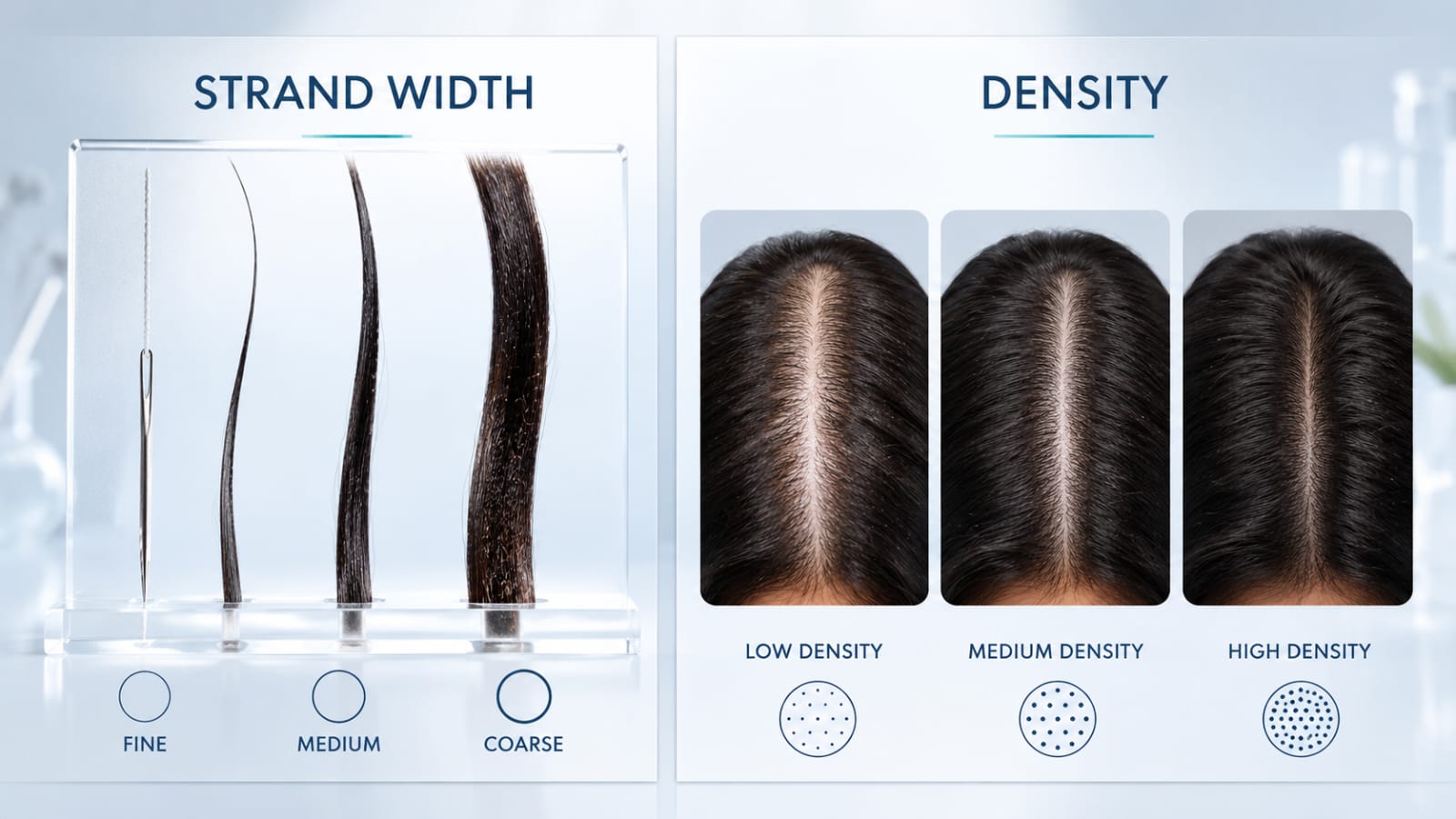
Dimension 3: Strand Thickness and Scalp Density
The final piece of your hair profile combines the individual width of your strands with the total volume of follicles on your scalp.
- Strand width: Place a single strand next to a piece of sewing thread. If it is significantly thinner, you have fine hair (fragile, easily weighed down). If it is thicker, you have coarse hair (resilient but requires deep lipid softening).
- Scalp density: If you can easily see your scalp through your hair without parting it, you have low-density hair. If your scalp is fully hidden, you have high-density hair.
Your Custom Formula Blueprint
Egypt’s environment adds unique stress to every hair type. Hard tap water leaves behind mineral calcification that chokes follicles and creates a stiff, dry film over the cuticle. A generic routine will not protect your structure. You need to match your hair type matrix with the right formula.
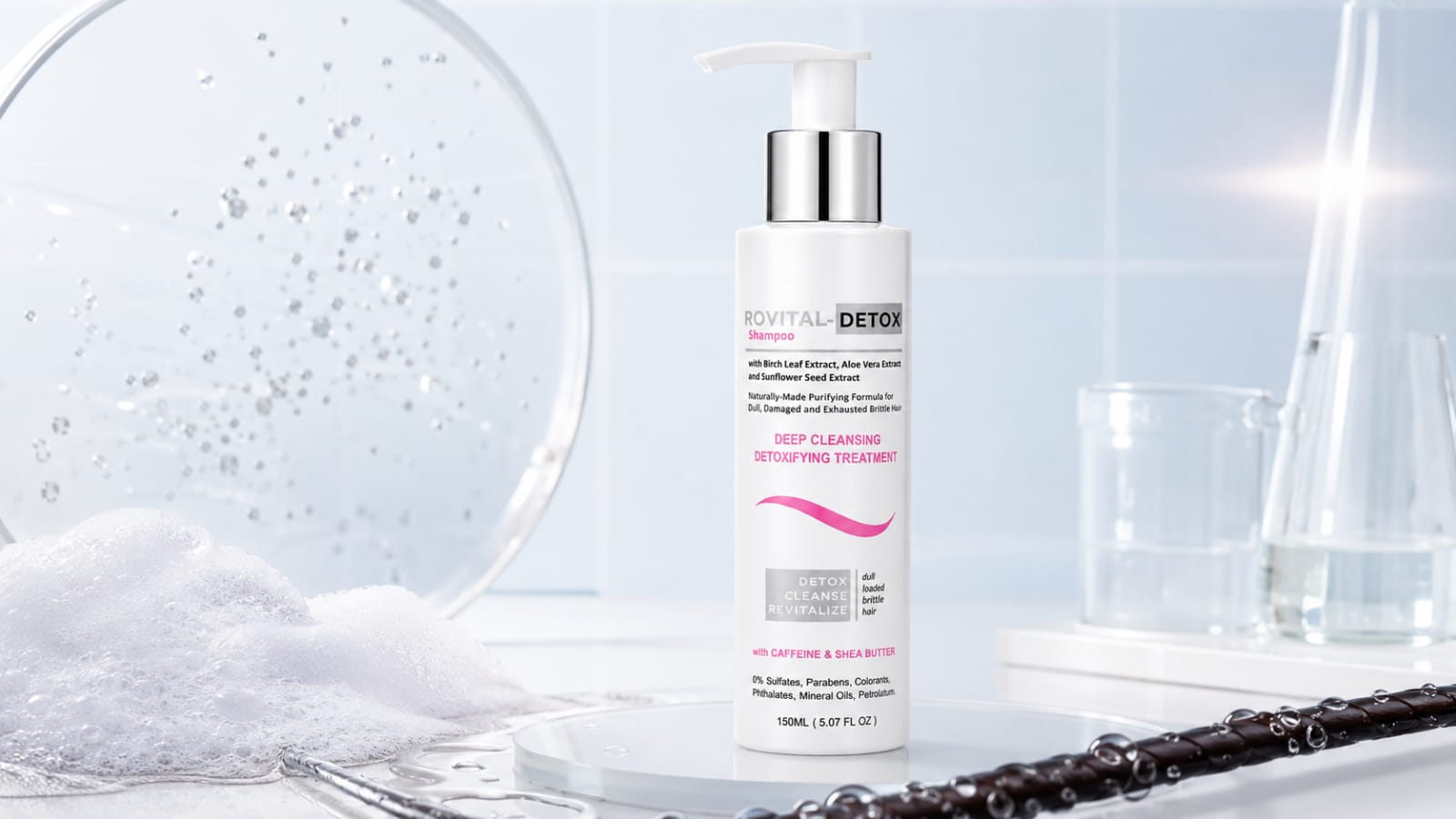
The Essential Reset for All Hair Types
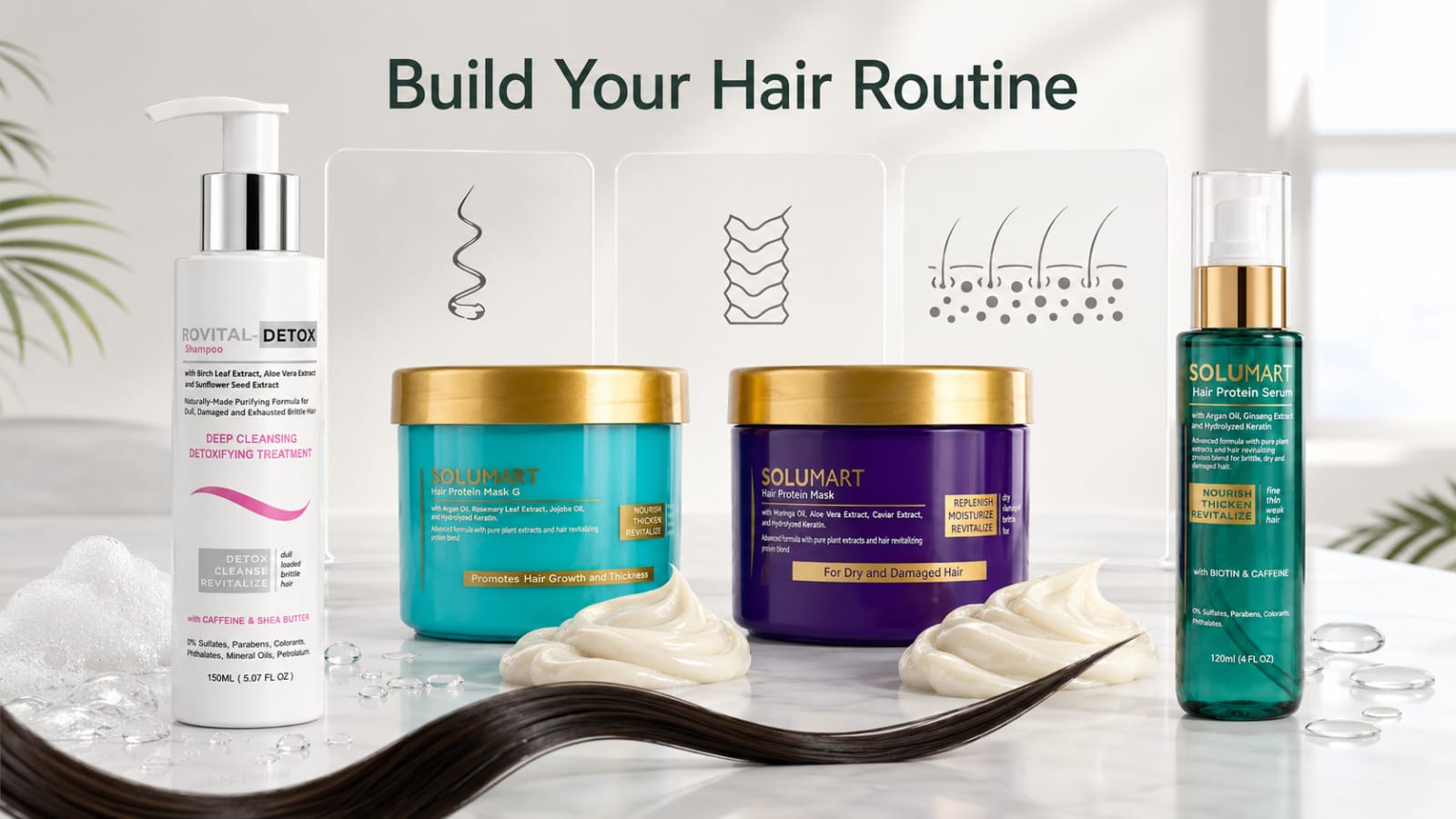
Before treating your hair type, clear the mineral buildup left behind by hard water. Wash weekly with Rovital-Detox Shampoo. Engineered with Birch Leaf Extract, Vitamin E, Caffeine, and Shea Butter, this formula deeply cleanses the scalp and purifies brittle strands without stripping essential natural lipids.
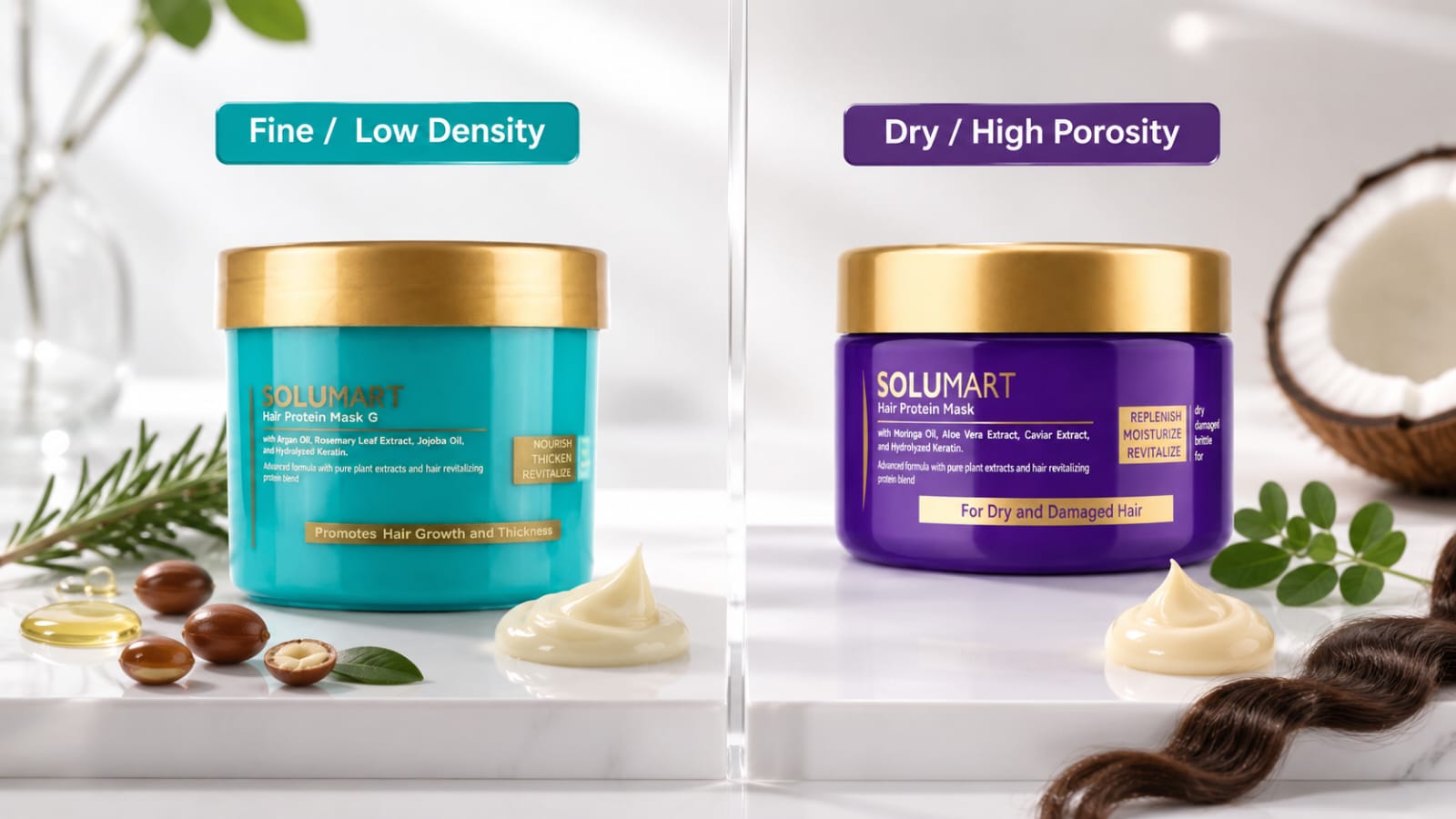
For Type 3 and 4 / Coarse / High-Porosity Hair
If your cuticles are raised, damaged, or chronically dry, you require an intensive, lipid-rich protein treatment to rebuild elasticity and softness.
For Fine / Low-Density / Thinning Hair
If your hair is easily weighed down, fine, or suffering from premature hair fall due to stress or prolonged hijab friction, your focus is follicle stimulation and density.
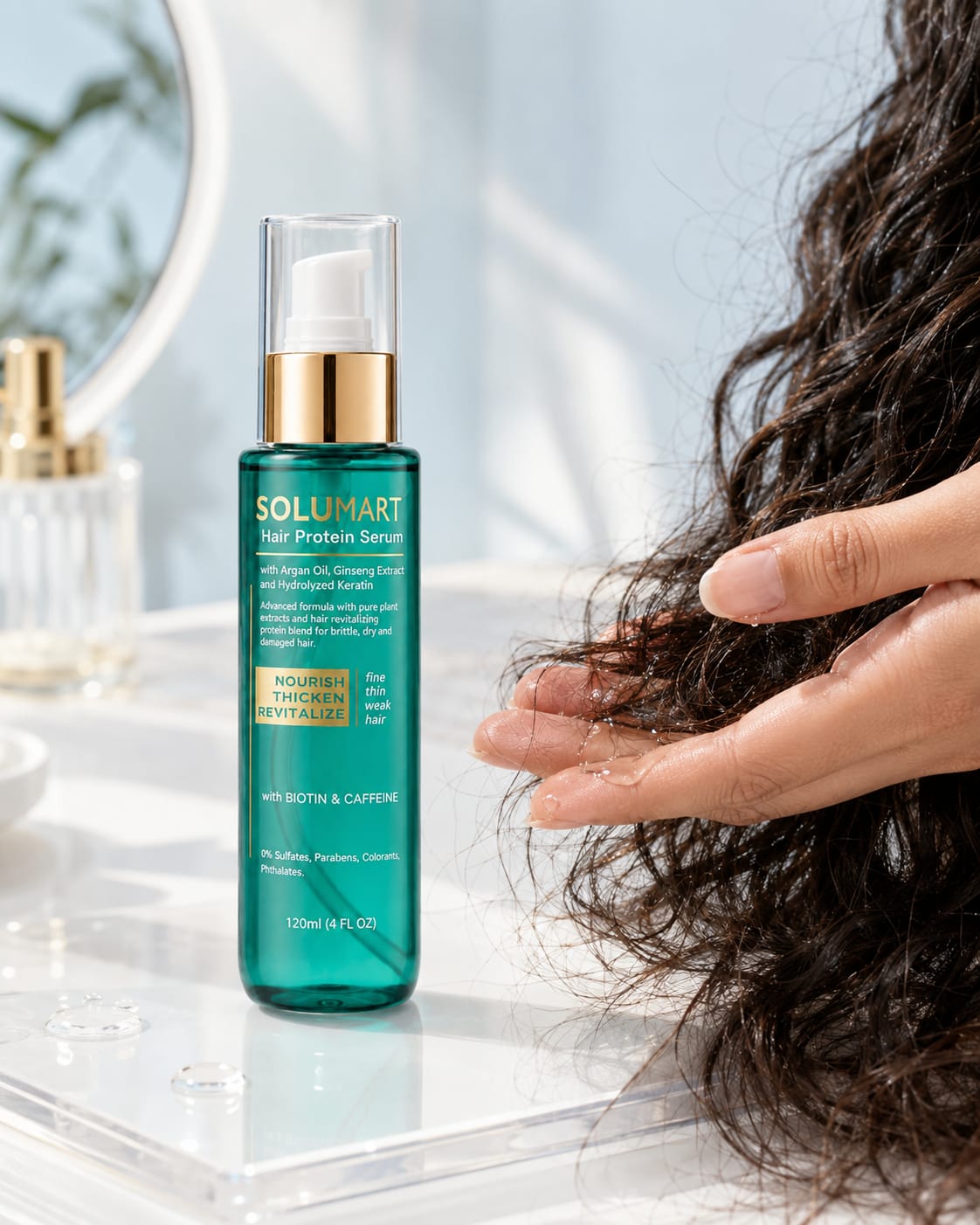
The Daily Atmospheric Shield (All Frizz-Prone Waves and Curls)
No matter your curl pattern, Egypt’s climate requires a leave-in shield against humidity and heat tools.
Honor Your Hair’s Biology.
Discovering your true hair type changes everything. It shifts you away from buying into short-lived trends and anchors you in genuine cosmetic science. Listen to your strands, respect their porosity, and give them the targeted, clean nourishment they need to thrive.
Frequently Asked Questions
Can your hair type change over time?
Yes. While your baseline follicle shape is genetic, your hair type, texture, and pattern can shift due to hormonal changes such as postpartum shedding, severe environmental damage from hard water calcification, or excessive chemical processing that permanently degrades the protein bonds within your hair cortex.
What is the easiest way to test my hair porosity at home?
Take a single strand of clean, dry hair and place it into a glass of room-temperature water. If the strand floats on top for several minutes before sinking, you have low porosity. If it sinks to the bottom almost instantly, you have high porosity.
Why do standard silicones make low-density or fine hair look worse?
Standard heavy cosmetic silicones build up quickly on the outer cuticle layer. Because fine or low-density hair lacks the thick structural volume to support this added weight, silicones flatten it down, making it look limp, thin, and oily within hours of washing.